

Table of Contents
- What Makes a Vacuum Compression Travel Backpack Different
- Carry-On Travel Backpack Sizing and Airline Considerations
- Travel Backpack Size Guide and How to Pack Efficiently
- Frequently Asked Questions
Last Updated: 11 October 2026
What Makes a Vacuum Compression Travel Backpack Different
A vacuum compression travel backpack uses an airtight compartment and portable pump to remove excess air from soft items like clothing, reducing bulk without changing weight. This lets you fit more gear into carry-on dimensions or pack heavier jackets without exceeding baggage limits.

Compression works best for soft fabrics, shirts, trousers, jumpers, underwear, while dense items like shoes don't compress meaningfully. The real win is reclaiming wasted space so you can pack smarter without overstuffing.
Carry-On Travel Backpack Sizing and Airline Considerations
Carry-on dimensions vary between airlines; most allow bags around 55 x 40 x 20 centimetres, but budget carriers enforce stricter limits. Always check your specific airline's baggage policy before travelling.
The IATA standard for carry-on luggage suggests 55 x 40 x 20 centimetres as a baseline, though individual airlines set their own rules. Some carriers measure strictly; others are more flexible if your bag fits in the overhead bin.
Physical dimensions matter most at check-in; compression alone won't guarantee approval. Weight limits also apply: domestic flights often allow 7 kilograms carry-on, international routes up to 10 kilograms. Compression reduces bulk but not weight, so overpacking still counts against you.
Travel Backpack Size Guide and How to Pack Efficiently
Choose a backpack sized to your trip length: 32 litres for weekends and short business travel, 40-45 litres for week-long journeys.
Pack heavier items (shoes, toiletries) at the bottom, mid-weight items (trousers, jumpers) rolled or folded in the compression compartment, and lighter items in remaining gaps. Roll clothing tightly, use the pump gradually to avoid uneven compression, leave it accessible for security checks, and keep the compartment sealed during travel.
The TSA guidance on portable air pumps confirms that battery-powered pumps are permitted in carry-on baggage, though some airlines have specific rules. Check ahead if you're flying internationally.
Pack your compression compartment before leaving home, then top up air pressure at your destination if needed to maintain organisation throughout your trip.
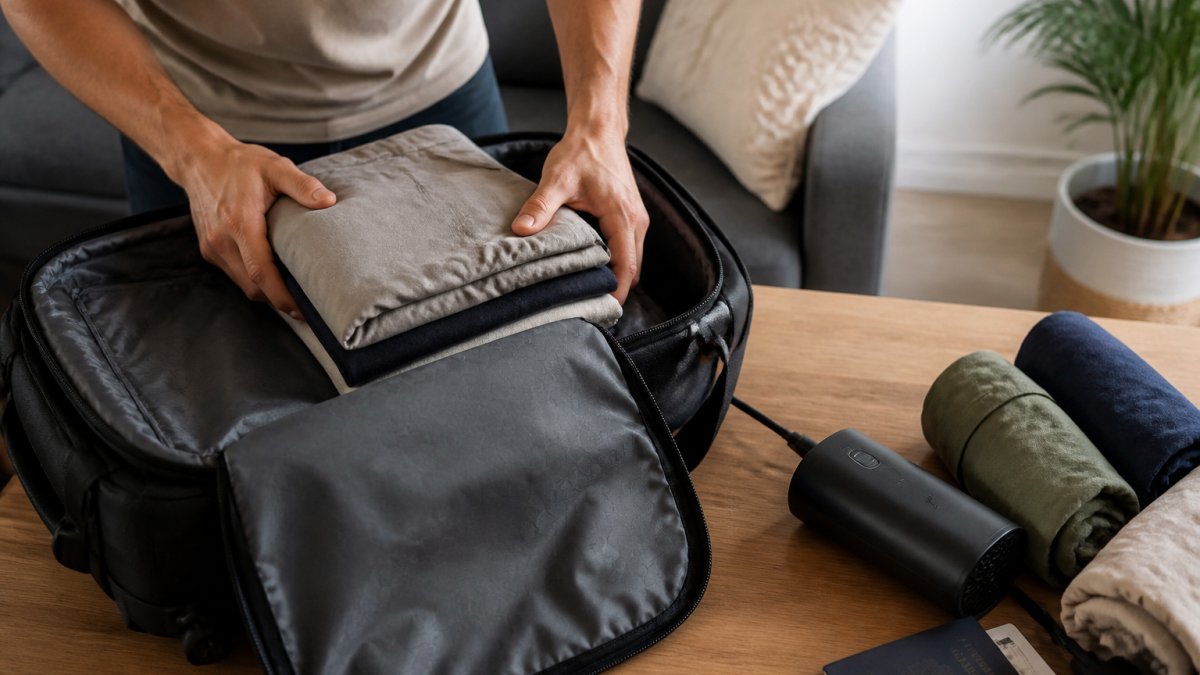
Packing efficiently means matching your backpack to your journey and understanding what compression actually does, it reclaims space, not weight. The Australian Consumer Law guidance on product durability reminds travellers to check warranty and return policies before purchasing, especially for gear you'll rely on repeatedly.
We've designed the VENTUREBUILT Vacuum Compression Travel Backpack + Air Pump with this in mind: a 32-litre base that expands to 45 litres, a dedicated compression compartment, and an included electric pump so you're never without one. It's built for the Australian traveller who values organisation and wants a backpack that adapts to different trip lengths without sacrificing comfort or durability.
Frequently Asked Questions
Does a compression backpack actually reduce weight, or just bulk?
Compression reduces bulk by removing excess air from soft items like clothing, not the weight itself. Your packed bag weighs the same, but takes up less space. This helps you fit more gear into carry-on dimensions or distribute weight more evenly across your back. For carry-on travel, smaller packed dimensions matter more than weight savings.
How do I know if a vacuum compression travel backpack will fit my airline's carry-on limits?
Check your airline's current cabin-baggage rules for both dimensions and weight. Compression backpacks typically expand and contract, so measure the bag at its maximum packed depth. Most airlines allow around 55 x 40 x 20 centimetres, but rules vary by carrier and fare type. Always verify before booking.
Are travel backpacks with electric pumps worth the extra cost?
An included electric pump adds convenience, especially for longer trips or frequent compression. Manual pumps require more effort and time. If you travel regularly and want to compress at airports or hotels without hand-pumping, an electric option justifies the investment. For occasional weekend trips, a manual alternative may suffice.


